best roofing material

What To Do If You Can’t Afford a New Roof

Nothing lasts forever – not even the most expensive roofing material. Regardless of what your roof is made of, it’ll eventually age or give in to severe damage caused by extreme weather or another fortuitous event.

When that happens, you’re left with no choice but to have it replaced. But like many property owners before you, the problem is not having the money to afford a new roof. You’re in a mess, left in a corner with no solution in sight.

If you can’t afford a new roof, know that there are other options to consider. It’s not like you sit idle and wait for nothing. Keep reading this article and learn about the potential ways to smartly solve your predicament.

Do You Actually Need a New Roof?

Some property owners are overwhelmed by the prospect of replacing a roof.  They and you are right: The cost associated with it is a big deal. But before you stress yourself out, think about the possibility of having it repaired instead.

Just because a local roofer told you that you need a new roof doesn’t mean that he’s accurate or telling the truth. Talk to other roofing contractors and tell them about your situation. Some roofers can salvage a roof for less money than it’ll cost to replace the structure.

Some old and severely damaged roofs can be remedied with the necessary repairs and the best roofing material. That will last you for at least a year. That should be enough time to save money for the inevitable replacement. Instead of relying on the sole assessment, you must get at least three independent assessments and repair estimates to fix your roof.

Property owners spend an average of $900 for roof repair, although minor fixes typically cost around $200. If you’re facing a major roof repair project, you’ll have to shell out at least $500 and upwards to $1500.

As much as you want to replace your severely damaged or aged roof, you may have to contact a roofing professional first to inspect the structure. Roof repair costs less than a total roof replacement, but even that is a hard pill to swallow when you’re low on funds.

Financing Options that Include Best Roofing Materials

If you can’t afford to pay cash for roof repairs, there’s a handful of financing options available to ease your burden. Use your credit card to get the repairs done and have enough time to pay off the charges.

If you’re uneasy about the credit card option, getting a personal loan is the next best thing. It gives you the option to pay on a monthly scheme while the needed repairs are addressed right away. Keep in mind that this is a short-term investment for your property, so please be sure to use the best roofing material. Use money wisely.

Improvement and Renovation Grants with Best Roofing Material

Applying for a home improvement or renovation grant is a popular option for roof repairs. They’re available from the local and national governments, and they usually include the best roofing material.

In North America, these home improvement or renovation grants are meant to provide financial assistance to property owners who can’t afford to have their homes fixed after weather devastation or natural disaster.

Another type of grant focuses on low-income homeowners who need help in improving their houses. Home improvement and renovation grants are meant to give property owners relief as they come with low-interest rates compared to standard loans.

Consider DIY

If you have tried roof work before, then you should explore fixing the structure one more time. On the other hand, DIY roofing projects are only meant for minor repairs. Unless you’re a roofing professional, you’ll have to tap the services of a licensed contractor for major repairs and replacements. But because you’re short on cash, there’s nothing wrong in pondering a DIY solution.

Refinance the Property

Refinancing your home make sense, too. Home improvement loans include refinancing the property, where there’s an explicit set of guidelines to be followed. In most scenarios, the loan is exclusively intended for the needed repairs and cannot be used for other purposes. Since the roof is part of the property, this option is viable for major roof repair jobs.

See to it that you talk to a financial expert before taking this path. You need professional advice since refinancing your home is a long-term responsibility that affects you and your family’s future. Aside from getting a reasonable interest rate and favourable loan term, the financial expert helps you understand the legal consequences in the failure to pay the loan.

Why Not Save Some Cash?

Investing in a new roof is out of the question, but with the help of a professional roof inspector, you could wait it out for several months to afford a repair project.

Call a local roofer to examine the structure. If the inspection report says that you can live with the damage for a year or so, you can go through your budget and save the necessary funds for a major repair. There’s always the option of cutting costs on stuff like food, vacations, and entertainment.

Instead of getting a loan and paying for the interest rates, you’ll save cash and end up fixing your roof with no long-term financial responsibilities to cover.
common roofing terms

Roofing Terminology: A Guide to Common Roofing Terms

Give a step forward learning common roofing terms in advance! Replacing or fixing your roof means that you’re about to hear industry-specific terms from the roofing contractor.
Yes, you’re most probably unfamiliar with most of these terms, but you can always ask the roofer to expound. Nevertheless, it’s helpful to learn some roofing terminologies on your own so that you won’t feel overwhelmed. All it takes is to read this guide.

Common Roofing Terms

There are thousands of roofing terms, and one post isn’t enough to tackle them all. So, we stick to the most common ones for the typical property owner. It makes sense to start with the five popular roofing options in North America:

Asphalt Roof

Shingles made from asphalt are by far the most preferred residential roofing material in this part of the world.
Fiberglass reinforces the new iteration for extended life. Fortunately, the price remains competitive, which is why an asphalt roof never goes out of style.

Wood and Cedar Shake

Wood shingles are as competitive as asphalt in pricing, but its advantage is its aesthetic value. In other words, it looks more pleasing than the conventional asphalt roof, thanks to the rustic and natural appearance.

Metal Roof

Roofs in metal are better to resist extreme weather all year. As metal is resilient and resistant to severe conditions, i.e., snow, strong winds, and torrential rain. Metal roofs in North America come in two styles: shingles and panels. The material composition can be aluminum, copper, stainless steel, and zinc.

Tile and Slate

Tile and slate make for an ideal customized and DIY roof as they’re versatile and come in a handful of colours. Unlike asphalt and metal, tile and slate roofing materials are light enough for a DIY enthusiast or a handyman to install.

Rubber

The purpose of a roof made from rubber material is to mimic the asphalt shingle. It’s the newest roofing material available in North America and is causing quite the stir because of its competitive price and durability.
Aside from the types of roof, there’s a handful of common terms in roofing you should know:

1. Course

Refers to a row of shingles or other roofing materials that run horizontally across the structure’s length.

2. Decking

The roof’s decking is a sheet material usually made from plywood. It is attached to the rafters, which in turn is found in the attic. The decking serves as the host for other roofing materials, i.e., shingles and underlayment.

3. Downspout

This part of the roof comes in the form of a pipe installed to the building’s sides. Its purpose is to direct water from the gutters and away from the structure.

4. Drip Edge

It’s an L-shaped metal strip situated along the edges of the roof. It allows the water to drip, preventing a possible buildup in the eaves, siding, and decking. The drip edge is also responsible for preventing moisture penetration in the fascia boards.

5. Chalk

In roofing, chalk refers to a powdered residue applied on the surface of a material.

6. Chalk Line

It is a line purposely made on the roofing structure by snapping a cord wrapped in coloured chalk. Depending on the roof material, some contractors use a taut string instead. The idea of a chalk line is to provide a guide for alignment purposes.

7. Chalking

The term pertains to the degradation of a chemical ingredient used in roofs, such as coating and paint.

8. Chimney

The chimney is a structure that projects through and above the roof for aesthetic and practical purposes. Wood, stone, metal and masonry are the most common materials to build chimneys.

9. Fascia

Those boards exposed on the roof eaves or overhang’s front edge make up the fascia. The boards are typically made from wood, vinyl, or aluminum. The gutters can’t be adequately installed without the fascia.

10. Flashing

The flashing is a sheet metal material that prevents water from penetrating through the projection and intersections in a roofing system.
Contractors install flashing to protect the chimneys, valleys, joints, vent pipes, and other parts of the roof where water naturally finds its way through.

11. Gutter

The gutters are troughs embedded in the fascia board. Guttering is crucial for collecting water run-off from the roof, leading to the downspouts and the ground.

12. Ice Dam

This describes a condition in which the combination of ice and snow thaws and re-freezes at the roof’s lower edge.
Ice dams cause water to back up and collect under the shingles. The pressure created by the buildup of water causes leaks and extensive water damage if not addressed.

13. Overhang

“Overhang” is the part of the roof which extends beyond the exterior walls of the building or house.

14. Rafters

The rafter provides support to the roof. It is the one you see in an unfinished ceiling of an attic. As raffers are attached to the roof deck, they play a critical role.

15. Ridge

The ridge describes the top edge of a couple of intersecting sloping roof surfaces.

16. Valley

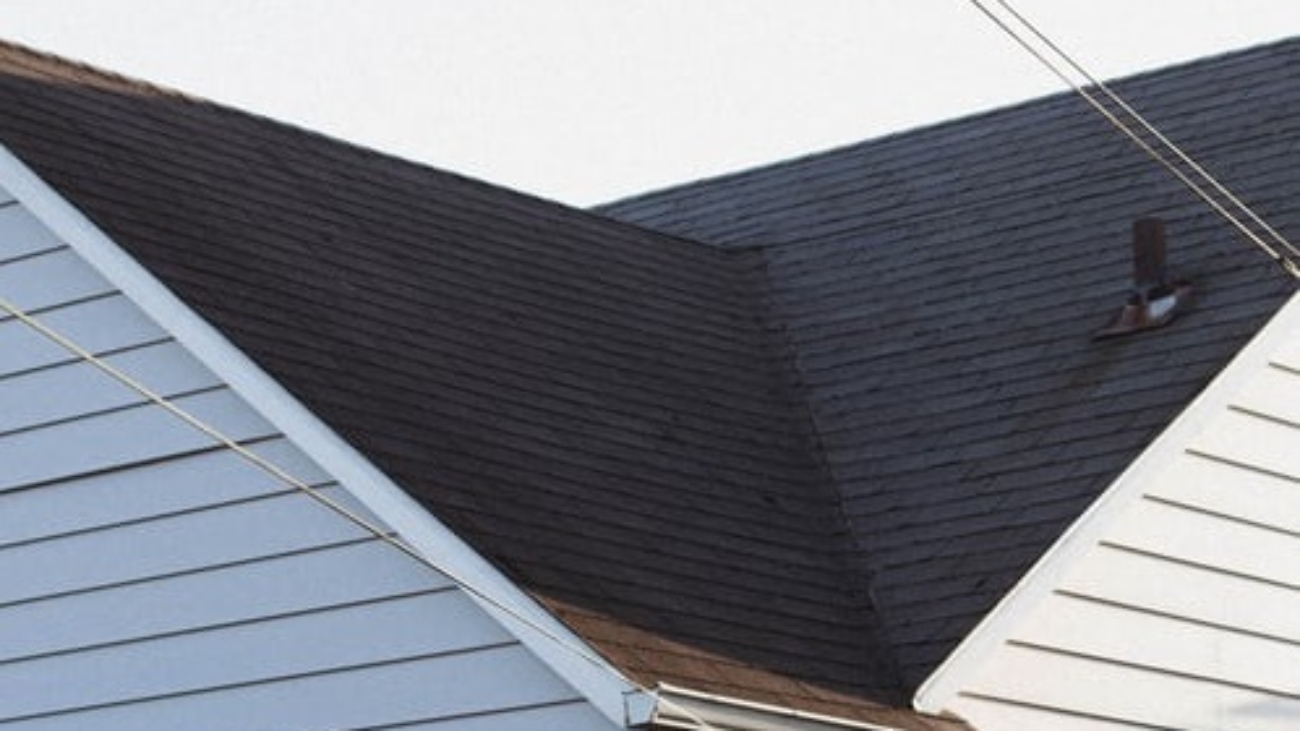
The roof valley is an area where two adjoining sloped planes meet. It’s easy to spot since it creates a “V-shaped” depression on the roof.
Knowledge of common roofing terms comes in handy when you’re venturing on a repair, installation, or replacement project.
It protects you from getting ripped off by a mischievous roofer, and it helps you find the best roofing contractor by sharing educated conversations with them.

home insulation

Home Insulation: Signs Your Home Is Under Insulated

Most of us don’t think a lot about home insulation, but if your home isn’t properly insulated. It can lead to many different problems – much worse than just a cold home. Including increased energy costs, water damage, and mold growth. To protect your home from this type of damage it’s important to know the signs of an insulation problem. Here are some of the more common issues to look for that will keep your home properly insulated:

High Energy Bills

A homeowner’s energy bill is mostly spent on heating and cooling costs. In the winter, you heat your home, and in the summer, if you have an air conditioner, you cool it. That number goes up drastically when a home is poorly insulated as your utilities have to work overtime. Proper insulation can cut those costs by an average of 20%. You should keep an eye on how much you spend on energy each month and if it continues to climb then you may have a problem. You should be able to login online to view your history and see an average. Obviously, your bill will increase during winter months but you should be able to locate if there is an unusual spike.

Cold Walls, Floors, Ceilings and Rooms

The ceilings, walls and floors in your home should usually feel warm and dry. When drywall and panelling inside a home feels damp or cold, it is probably a sign that there is not enough insulation and should be fixed immediately. In addition, when touching an outside wall, it should feel cold because the insulation is keeping warm air inside your home.
Unfortunately, heat and cool air can escape almost anywhere that doesn’t have insulation to stop its path. Do you find that some rooms in your home are inexplicably colder or hotter than others no matter how you much you adjust the thermostat? If those rooms are well ventilated, then the problem is most likely bad insulation. Some of the worst culprits are rooms above the garage or attic spaces.

Chilly Drafts

Especially during the colder winter months, drafts in certain areas of a home are caused by cool air entering around window frames and doorways. By having extra layers insulation added to these areas, you and your family can avoid having to cope with chilly drafts. Using Spray foam is a good way to seal and insulate any cracks and crevices.

Mice & Insects Are Invading

There is nothing worse than finding your home invaded with mice and other rodents. Unfortunately, these rodents can enter through very small holes and crevices around doorways and windows. If you find rodents constantly getting into your home, it’s more than likely these openings are also how cold air enters and warm air escapes. They should be patched up not only to stop the rodents but to stop hot air from escaping.

Water Leaks in the Attic

Just as bad insulation lets heat escape from your home, it also tends to let water in. Water obviously has a much easier time finding its way into a poorly-insulated home than a well-insulated one. If you have a leak in the attic, your insulation may be part of the problem. Leaks and water damage are a sign that you should get your insulation inspected as soon as possible.  Water damage can cause many costly problems down the road, including mold issues, so get it fixed as soon as possible and don’t procrastinate.

Frozen Pipes

While most people think of poor insulation as just a minor inconvenience but it, in fact, can cause a lot of damage to your home if left unchecked. Frozen pipes in your walls are another indicator you have an insulation problem. Proper insulation protects your home from damage caused by freezing temperatures. Poorly insulated exterior walls can cause frozen pipes. Which can then burst, which can cause thousands of dollars worth of damage.

Ice Dams On Your Roof

A sign of poor insulation in winter are ice dams. Which are built up patches of ice that can prevent natural melting or water from running off your roof.  Ice dams are a result of heat rising from a poorly insulated home. That melts the bottom layer of snow on your roof. The melted water then trickles down towards your gutters and once it hits the colder air may begin to freeze. This can cause chunks of ice and icicles to form on the perimeter of your roof. Not only does it wreak havoc with your gutters and roof, but it also becomes a safety hazard for anything or anybody below as the ice can fall on people passing by.

Get An Inspection

The easiest way to tell if your house is well insulated is to have an experienced inspector look at the floors, ceilings, and walls of your home. Many insulation installers have access to specialized equipment and some are happy to offer a free in-home inspection. If you are wondering if a home inspector is worth it, remember roughly a quarter of your home’s heat escapes out through the roof. And another 35 percent goes out the windows. It’s definitely worth checking insulation levels to put some of those savings back in your wallet. In addition, if you have an issue with your roof or you need it inspected, give us a call at Cambie Roofing and we’ll come out and give you a free estimate.